

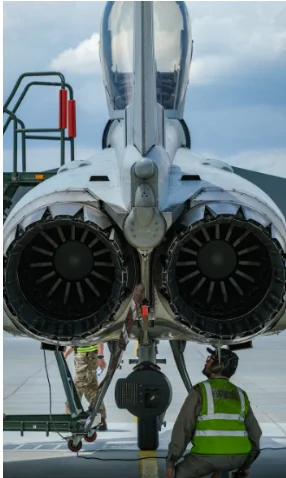
Aircraft inspections demand accuracy, efficiency, and a clear visual understanding of engine and system conditions. Whether working on a business jet, private aircraft, or turbine-powered helicopter, aviation technicians rely on borescopes to navigate internal components without dismantling major assemblies. Because borescopes play such a critical role in turbine blade inspections, gearbox evaluations, and routine borescope checks, choosing the right rental unit is essential. Before selecting a borescope for your next inspection, it’s important to understand the configuration, capabilities, and service expectations that ensure both compliance and clarity.
Understanding the Purpose of Your Inspection
The first step in selecting the right borescope is defining the inspection’s purpose. Fixed-wing and vertical-flight platforms often have different requirements based on engine type, access ports, and the nature of the maintenance task.
For turbine blade inspections, for example, technicians must navigate tight, curved passages while capturing close-up details of erosion, cracks, or thermal damage. In contrast, gearbox borescope inspections focus on gears, bearings, splines, and lubrication pathways.
Knowing whether the inspection relates to hot-section diagnostics, FOD checks, compressor blade integrity, or gearbox condition helps determine which borescope features—like articulation, diameter size, optical clarity, or length—are essential.
Choosing the Proper Diameter and Working Length
One of the most important technical considerations when renting a borescope is the size of the insertion tube. Most aviation engines, especially those used in private jets, business jets, and helicopters, require a 4mm diameter with a 1.5-meter working length. This configuration is ideal for navigating manufacturer-designed inspection ports without causing damage or requiring partial disassembly.
A borescope that is too large risks scratching internal components or being unable to pass through access points. One that is too small may sacrifice image quality or articulation strength. Working length is equally essential, particularly for turbine engines where internal components may be positioned deep within multi-stage compressor or turbine assemblies. Always verify the minimum required length before finalizing a rental.
Evaluating Image Quality and Recording Capabilities
Clear imaging is critical when inspecting aviation engines. Modern videoscopes are designed with high-resolution sensors, bright LED illumination, and processing systems that ensure sharp visual detail—even in tight, low-light environments. Before renting a borescope, technicians should consider:
- Resolution – Can the system reveal micro-cracks, pitting, or surface erosion?
- Brightness – Does the illumination remain consistent throughout long internal passages?
- Recording features – Can both images and video be captured for documentation?
For turbine blade inspection, the ability to pause, zoom, and analyze frame-by-frame is especially valuable. High-quality video recording also provides crucial evidence for compliance and maintenance history.
Considering Articulation for Precision Navigation
Articulation—typically 2-way or 4-way—allows the borescope’s distal tip to turn and navigate around internal structures. For hot-section or combustor inspections, articulation is essential for viewing behind stators, between blades, and around curved housings.
When renting a borescope, consider:
- Degree of tip movement
- Smoothness of articulation
- Whether articulation is manual or motorized
A borescope with strong articulation reduces the need for repeated repositioning.
Assessing Durability and Handling Ease
Because borescopes are used in demanding, sometimes high-temperature environments, durability matters. A rental unit should be tested, clean, and in reliable working condition. Inspectors should look for:
- Reinforced insertion cables
- Secure housing around articulation controls
- Clear, undamaged lenses
- Responsive interface systems
Lightweight, ergonomic systems also reduce fatigue during longer inspections, particularly when working in awkward positions around engine mounts or in tight hangar spaces.
Confirming Support, Availability, and Turnaround Time
Beyond technical features, the rental experience should offer reliability and convenience. Aviation schedules are tight, and inspections often need to be completed quickly to keep aircraft operational. Choosing a rental provider that offers same-day processing, overnight delivery, and responsive customer support can significantly reduce downtime.
Before renting, consider:
- Availability of the exact model needed
- Backup equipment options
- Ability to troubleshoot remotely
- Speed of shipping and return logistics
For technicians on strict timelines—especially those dealing with AOG scenarios—the right rental service can be the difference between delays and on-schedule operations.

Reliable Borescope Rentals and Repairs for Aviation Professionals
For aviation technicians preparing for critical inspections, USA Borescopes offers a dependable resource built specifically around the needs of aircraft maintenance teams. As engine and gearbox systems grow more advanced, having access to the right borescope—supported by knowledgeable specialists—has never been more important. Their team provides fast, flexible rental solutions throughout the continental U.S., along with expert borescope repair services that include no-cost evaluations for all makes and models. To discuss your specific needs, call them now or reach out to their team today through their direct support channel.
About the Author
Avery Collins is a technical aviation writer specializing in aircraft systems, inspection technologies, and maintenance documentation. With experience supporting both fixed-wing and rotorcraft operations, Avery focuses on delivering clear, practical insights for aerospace professionals.
